Rodent pressure in Accokeek follows the tree line and the water. Homes backing woods in Moyaone Reserve, Bryan Point, and along the Farmington Road Wetlands see white-footed and deer mice push indoors in October and…
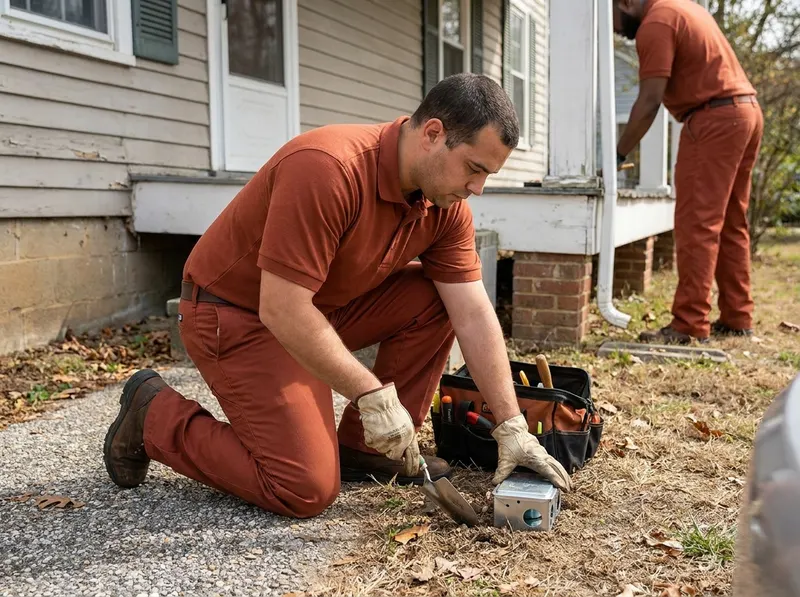
Rodent pressure in Accokeek follows the tree line and the water. Homes backing woods in Moyaone Reserve, Bryan Point, and along the Farmington Road Wetlands see white-footed and deer mice push indoors in October and November as overnight temperatures drop. Older half-acre and acre lots in Simmons Acres, Cactus Hill, and Danville Estates tend to have the classic setup: a vented crawl space, a sill plate that never got sealed, and utility penetrations for water line, dryer vent, and A/C lineset that were foamed once, twenty years ago, and have since been chewed open. Norway rats show up in a different pattern — closer to creek banks, farm-edge properties near the National Colonial Farm side of Piscataway Park, and behind commercial trash enclosures along the Livingston Road and MD 210 corridor, where they burrow rather than climb.
The decision most homeowners face is trapping-only versus trapping plus exclusion. Trapping alone removes the rodents you have; sealing is what stops the next ones. A trap-only visit makes sense when the entry is already known and closed — a garage door left open during a move, one gap already patched — or when you're a landlord who needs the current activity knocked down fast in a Cherry Hill Estates or Manokeek rental before a scheduled repair. It is the cheaper option and it works short-term. The trade-off is honest: if the quarter-inch gap behind the kitchen sink or the chewed corner of the crawl space door stays open, activity typically returns within one to two seasons, and you pay for trapping again. Exclusion costs more up front and takes longer — measuring, cutting hardware cloth, sealing around pipe boots and sill gaps — but it's the version that ends the loop.
Safety questions come up on nearly every Accokeek visit, usually about dogs, chickens, well water, and vegetable beds. Inside the living space, the default is mechanical traps set in areas pets and children cannot reach — behind appliances, inside crawl space voids, in sealed attic runs. Where exterior rodenticide is appropriate, it goes in locked, tamper-resistant stations anchored in place, not loose bait tossed under a deck. On properties in Berry Hill, Hallowing Point, and Farmington Landing with private wells, raised beds, or free-range poultry, we'll tell you which placements we're skipping and why before anything is set out.
You also get a straight answer on follow-up. Mouse jobs commonly need one or two return visits to clear traps and confirm the seal is holding; rat jobs on wooded or creek-adjacent lots sometimes need three. Every follow-up is scoped and priced before it happens, so you're not signing up for open-ended monthly billing to solve a fall mouse problem. If the inspection shows the real driver is something structural — a collapsed crawl space vent screen, grade sloping into the foundation, a woodpile stacked against siding — we'll say that plainly, even when the fix is partly yours to make. Find the entry. Seal it shut.
Every job gets a firm, written price after a free on-site visit.
Tell us about your rodent control for mice and rats job in Accokeek and we'll send a clear, written quote — usually the same day.
 Vexaro Pest Services