Swarm season is what brings most Accokeek calls in. Eastern subterranean termites in southern Prince George's County typically swarm on warm, humid afternoons after spring rain, and the first thing homeowners see is a…
Swarm season is what brings most Accokeek calls in. Eastern subterranean termites in southern Prince George's County typically swarm on warm, humid afternoons after spring rain, and the first thing homeowners see is a cluster of winged insects at a basement window or a scatter of shed wings on a sill. Termite swarmers have a straight-sided body, straight beaded antennae, and four wings of equal length; flying ants have a pinched waist, elbowed antennae, and front wings noticeably longer than the rear. That single distinction decides whether you need termite work or a simple ant treatment, and it is worth confirming before anyone quotes you a barrier. Bring us the specimen — misidentification is the most common reason people overpay in this market.
Accokeek geography makes some lots harder than others. Properties along the wooded edges of Moyaone Reserve and Bryan Point sit among mature hardwood stumps and buried root systems that hold moisture and feed established colonies within foraging distance of a foundation. Homes near the Farmington Road Wetlands and the low ground draining toward Piscataway Creek and Mattawoman Creek run damp crawl spaces most of the summer, which softens sill plates and keeps termite mud tubes viable year-round. Newer slab-on-grade houses in Cherry Hill Estates and Simmons Acres shift the risk to expansion joints, plumbing penetrations and bath traps rather than crawl space framing. Older half-acre-plus lots in Manokeek, Cactus Hill, Berry Hill, Danville Estates, Farmington Landing and Hallowing Point often show the same three findings: mulch bedded above the siding line, downspouts discharging within a foot of the wall, and a deck ledger or lattice frame set directly into soil.
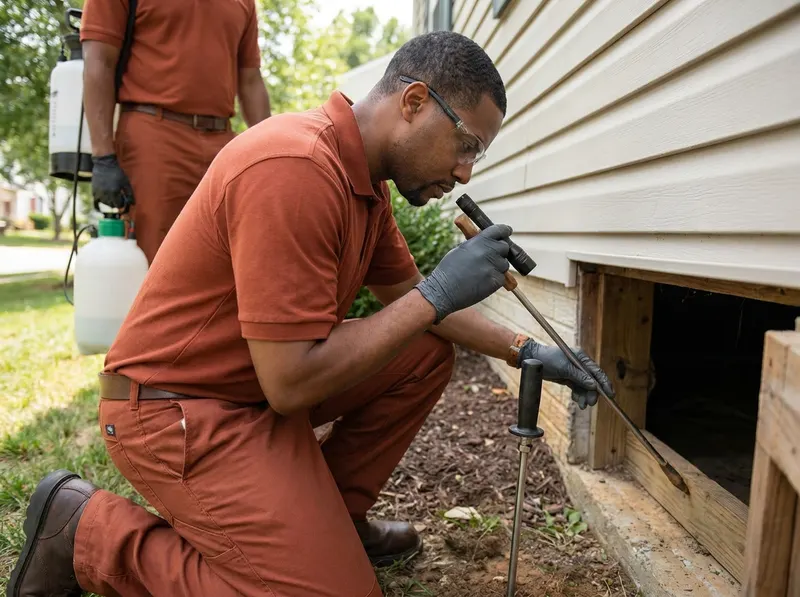
The treatment choice is a real trade-off, and it deserves a plain explanation. A liquid soil termiticide barrier requires trenching a narrow channel around the accessible foundation and drilling through concrete where a slab, stoop or patio abuts the house, so it is invasive to landscaping and hardscape — but it treats the entire perimeter at once and works fast against active tubes. An in-ground bait and monitoring system uses small stations installed in the soil at intervals around the structure, with no trenching and no drilling; colony reduction happens over weeks to months as workers carry bait back, and the system needs periodic monitoring to stay useful. Baiting is often the better fit on Accokeek lots with a well, raised vegetable beds, or dogs that dig — we note well and garden locations on the findings sheet and plan setbacks around them before anything is applied. Liquid barrier tends to be the better fit when tubes are already running up a foundation wall and you want the perimeter closed this season.
Either route, the work does not end with product. Termites get in where wood meets wet soil, so the findings sheet also lists what to correct: mulch pulled back to expose four to six inches of foundation, downspout extensions moved away from the wall, form boards and scrap lumber removed from under decks, crawl space vents cleared, and vapor barrier gaps closed. That is the part most spray-and-leave outfits skip, and it is why re-treatments happen. Find the entry. Seal it shut. Pricing is quoted from what the inspection shows — linear feet of foundation, crawl space access, drilling required, and whether activity is localized or perimeter-wide — never from a phone-guess. Call (227) 722-4043 to set the inspection, and we will walk the findings with you before any number is written.
Every job gets a firm, written price after a free on-site visit.
Tell us about your termite inspection and treatment job in Accokeek and we'll send a clear, written quote — usually the same day.
 Vexaro Pest Services